Songwriters and poets both talk about "the line", but they mean different things by it. For a lyricist, a line is usually a bar — a unit of time to be filled. For a poet, a line is a decision made on the page: where to break, what to leave hanging, which word to strand at the end so it rings twice, once on its own and once inside the sentence that follows. That second kind of line is portable. It survives the journey from page to song, and it's the quickest way to make a lyric sound written rather than assembled.
Here are five collections by British poets that reward that kind of reading. None of them are lyrics, which is the point. Read them with a pencil, mark where the lines end, and you'll come away with techniques you can use this week.
Carol Ann Duffy, The World's Wife (1999): voice as a costume
Duffy hands a monologue to the women myth and history left standing at the edge of the frame — Mrs Midas, Anne Hathaway, Queen Herod, Eurydice — and lets each one talk in modern, unhurried speech. The poems are funny, then they aren't. What makes them useful is the nerve of the impersonation: nobody explains themselves, and the line that changes everything arrives late.
Steal this
- Open mid-scene, not mid-feeling. A kitchen, a drink, a season.
- Give the narrator an attitude that works slightly against the story they're telling.
- Rhyme only where it can hide inside a stressed beat. A rhyme that announces itself stops the voice sounding like a person.
- Hold the reveal until the last line of the verse, then stop.
Simon Armitage, Kid (1992): the punchline lives on the break
Armitage's early monologues are spoken by men who talk too much and understand too little. The diction is deliberately plain — brake fluid, football, a pint — and then a line breaks and the poem turns. Read aloud, you notice how much of the comedy and the ache sits in the pause at the end of the line rather than in the words themselves. That pause is a bar rest by another name.
Steal this
Write a verse in ordinary speech and plant the dullest possible word at the end of each line. Let the next line detonate it. Resist the urge to make your narrator wiser than they are; self-deception is what holds a listener's attention.
Alice Oswald, Memorial (2011): repetition that keeps moving
Oswald's account of the dead in the Iliad runs on formula: names, epithets, similes that begin the same way and end somewhere new. Hundreds of lines share a shape and no two land alike. For a lyricist, this is the problem of the chorus solved on the page — how to say the same thing twenty times without boring anyone. The variation is never in the scaffold. It's in the single slot you're allowed to change.
Steal this
Fix a phrase, a rhythm and a number of beats. Change one element per repeat. Then read the whole thing in one breath per line; if you can't say it in a single go, a singer probably can't either.
Andrew McMillan, physical (2015): white space as rhythm
McMillan's poems are about bodies — gyms, beds, hospital corridors — and they're built from very short lines surrounded by air. Sentences refuse to finish where you expect, so a preposition or a pronoun sits alone and takes on weight it wouldn't carry inside a clause. The page becomes a kind of notation. It's the closest thing in contemporary poetry to seeing where a singer would breathe.
Steal this
Write a verse in long lines, then break it so the most important word stands by itself. Try the same lyric with three different breaks. Read each version against a simple chord change and keep the one that makes the held note land somewhere interesting.
Daljit Nagra, Look We Have Coming to Dover! (2007): invent your own dialect
Nagra's debut arrives with an accent the page has to accommodate: a heightened, punning English that mixes Punjabi cadences with the British canon, and monologues that swerve between comedy and argument. Rhyme is used as a joke, then as a trap. The lesson isn't that you should write in dialect — it's that dialect is rhythm, not decoration, and a register borrowed from how people actually speak in your family will carry more music than any amount of poetic vocabulary.
Steal this
Take a verse you've written in neutral English and rewrite it in the voice of someone who'd never use those words but would say the same thing. Keep the meaning. Keep the rhythm that appears.
Six moves worth rehearsing
- Read your favourite poem from one of these collections twice: once for sense, once marking every breath.
- Copy it out by hand without changing a word, then copy it again with your own line breaks. Compare what you moved and why.
- Underline the last word of every line. Those words are doing the structural work.
- Write your own verse with an equally strong set of line-ending words.
- Tap a steady beat while you read. Note where the lines fight the beat — that friction is usually where a melody wants to sit.
- Add punctuation back only where you'd genuinely pause.
From page to song
Borrow technique, not text. If you want to set an existing poem to music, or lift more than a passing phrase, you'll need permission from the copyright holder — usually the publisher — before you release anything.
Then remember what a song needs that a poem doesn't: repetition, a chorus, and a reason to arrive back where it started. Take the line-level craft and leave the rest of the poem behind. A good way to start is to write the lyric as a poem first, with deliberate breaks and no melody in mind, and only afterwards fit it to chords. You'll find the lines push back against the bar — and that resistance is exactly what makes a vocal sound like it means something. Pick one poem, one technique, and one verse this week. That's enough.
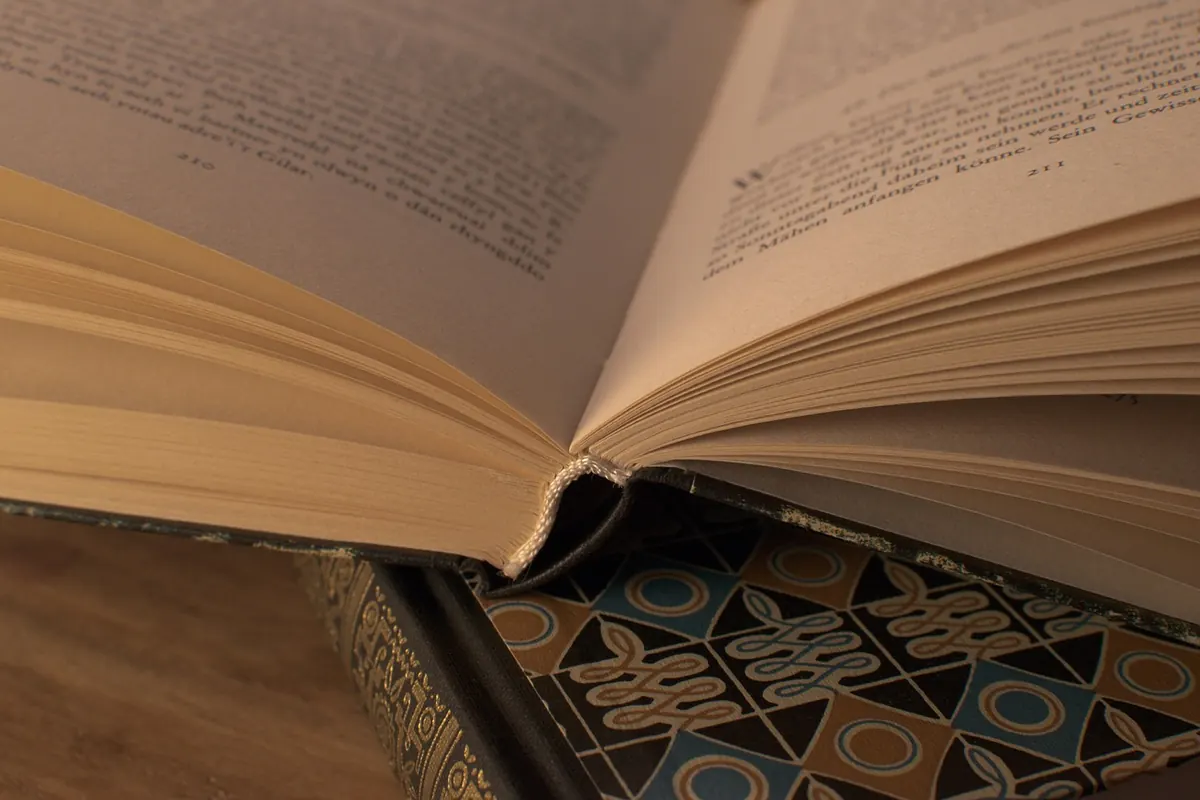
Photo: ThorstenF / Pixabay